 HelloStamped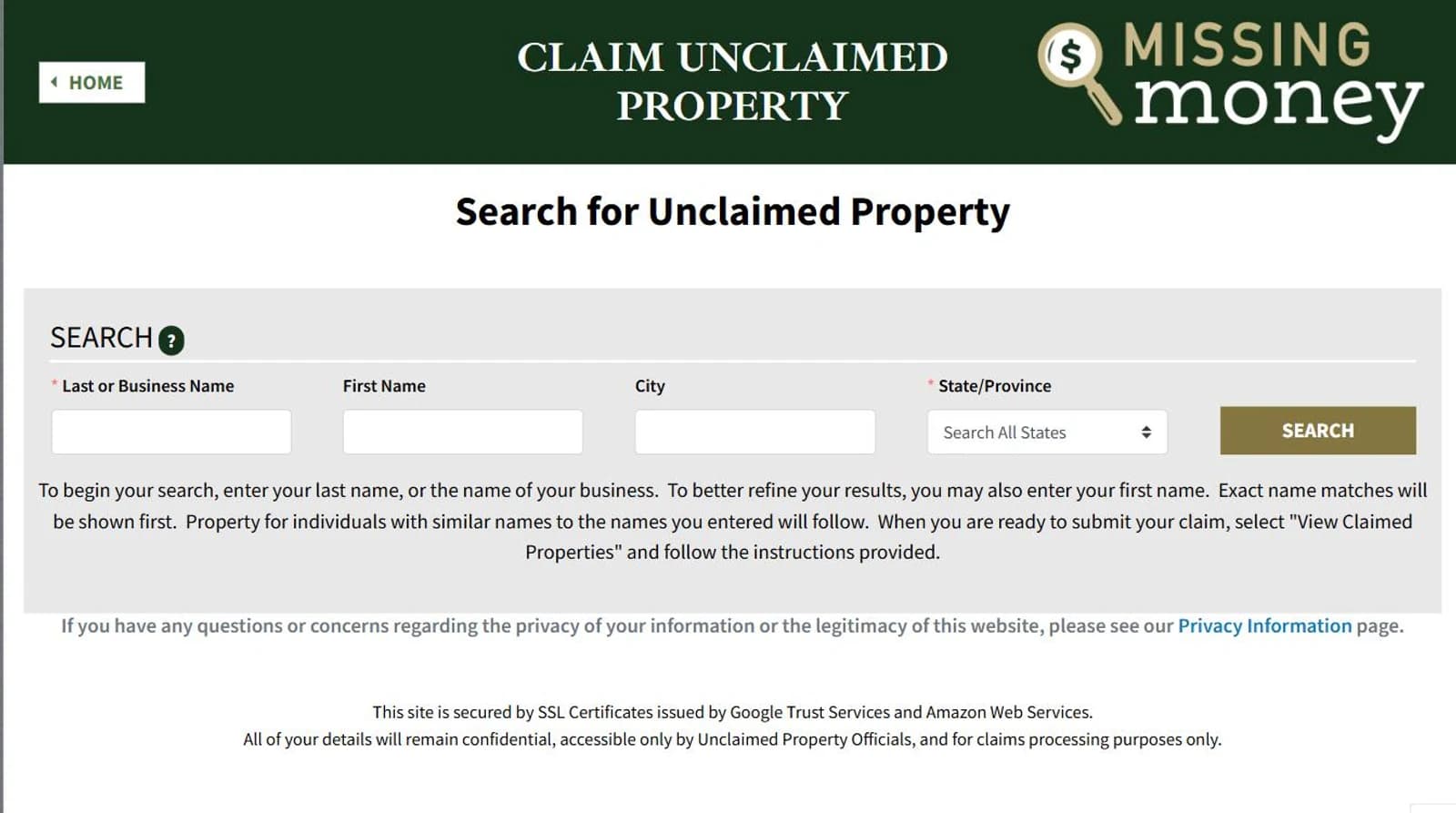
OfficialNAUPA — National Association of Unclaimed Property Administrators · Last verified
Money you may have forgotten. One name, two minutes, and the search is free
Deposits, final paychecks and refunds do not follow you to a new address. After a stretch of inactivity the company must hand the money to a state government, and asking for it back is free. About one in seven people has something waiting, and moving is not what creates it — moving is what stops the company reaching you first.
Does this affect you?
This rule works differently for two groups. Pick the one that describes you and we will highlight it — both stay on screen either way.
You are still in the United States
How to check: You have lived at more than one US address since you arrived.
- Where to look
- Every state you have lived in, not only the one you live in now.
You have moved back to India
How to check: You left the United States and closed your accounts behind you.
- Where to look
- —
This is general information, not advice about your case. If your situation does not match either group cleanly, that is exactly what your designated school official is there to answer.
It starts with a company that cannot reach you
Unclaimed property is not a windfall scheme and it is not about having had money to spare. It is what is left when a company owes you something small and the address it holds for you has stopped working. A utility deposit on a flat you left years ago, or the last paycheck from a job you gave notice at. A refund on a policy you cancelled, or the balance of a checking account you stopped using when you switched banks. The National Association of Unclaimed Property Administrators, the association the state programmes belong to, writes that "Approximately 1 in 7 people" have unclaimed cash or property waiting. That is a figure for the country as a whole rather than a statement about any particular reader, and the only way to find out which group you are in is to search.
Source: NAUPA — National Association of Unclaimed Property Administrators
How a closed account becomes state property
New York's State Comptroller puts the mechanism in one sentence: "After a period of inactivity, lost money is legally considered abandoned property and turned over to the New York State Comptroller's Office, where there's no fee or time limit to claim it." Read the second half twice. New York attaches no deadline of its own, so a payment handed over years ago is still claimable there today. Other states write their own rules, and some property elsewhere does expire, so the absence of a deadline is New York's statement about New York rather than a rule for the country. The figure on its page when this was read on 12 September 2026 was $489,952,388 returned in 2026, and it is a running total that moves every working day.
Source: New York State Comptroller — Office of Unclaimed Funds
What claiming from outside the country actually involves
New York invites "current and former New Yorkers" to search. That phrase means people who have left the state, not people who have left the country, and its claim pages are where the practical shape shows. A claim is filed online. New York says most are paid within 30 days, and its documentation page asks you to "Allow up to 90 days for us to review your claim" once extra papers are involved. Payment is the part that surprises people. "Your check will be mailed to the address provided on your claim form", and "Direct deposit or pre-paid cards are not available at this time." The check carries a deadline even though the claim does not: "You have until December 31 of the following calendar year to cash your check." New York asks a US citizen for a Social Security Number to file online. Anybody who will not give one is routed to a printed form signed by hand, since "Electronic signatures, such as through Adobe software, are not allowed." None of this says a claim from abroad fails. It says the money arrives as a paper check in the post, which is worth settling before you count on it.
Source: New York State Comptroller — Claim Submitted, What's Next?
Where the national search stops
One search is not the whole search, and NAUPA says as much in its own wording: "Most states participate in MissingMoney.com—a free website, sponsored by NAUPA, from which you can search participating state's databases for unclaimed property." Most is not all, and MissingMoney publishes which is which on its state index, where a state drawn in green is searchable there and a grey one is not. Hawaii and Pennsylvania were the two grey states on 12 September 2026, and participation is the sort of thing that changes quietly, so the index rather than this sentence is the thing to check. The state addresses are worth reading carefully as well, because several look nothing like the state's main website: California's search sits at claimit.ca.gov, Texas at claimittexas.gov, and Connecticut at ctbiglist.gov.
Source: NAUPA — Search Beyond Your State
What the states are actually holding
The Illinois State Treasurer names the categories that arrive, and the list is worth reading slowly, because most people picture a forgotten investment and none of these is that.
- Forgotten bank accounts
- Uncashed checks
- Insurance payments
- Utility refunds
- Safe-deposit box contents
- "and other funds turned over to the state"
Illinois says more than $5 billion is still waiting to be returned in that one state, and that its office helps more than 300,000 people search each year. Both figures are Illinois talking about Illinois; every state runs its own programme and publishes its own numbers.
Source: Illinois State Treasurer — Illinois Unclaimed Property
Search the name a stranger typed, not the name you use
MissingMoney.com is NAUPA's own national search, and its instructions are worth quoting in full, because the half people skip is the half that matters: "To begin your search, enter your last name, or the name of your business. To better refine your results, you may also enter your first name. Exact name matches will be shown first. Property for individuals with similar names to the names you entered will follow." So a first name orders the results rather than hiding the rest. What it cannot fix is a record filed under the wrong field entirely, which is the ordinary fate of an Indian name in an American system.
- Search your surname in the Last or Business Name box, then search again with your given name in that same box, because a company that took your names in the opposite order has filed you under it
- Try the other spellings that exist for you: an initial instead of a full middle name, a middle name recorded as a surname, a maiden name, and the transliteration on your earliest US paperwork
- Leave the state on Search All States, which is where the form already starts, rather than guessing which state to narrow to
- Search the official programme of each state you have actually lived in as a second pass, using the links NAUPA publishes for all of them
- Look at the federal holdings too, which NAUPA lists "in addition to state government programs": the FDIC, the National Credit Union Administration, the Pension Benefit Guaranty Corporation, HUD for an FHA insurance refund, TreasuryDirect for savings bonds, and the IRS for an undeliverable refund check
Filing the claim, step by step
A claim is filed on the state's own site rather than anywhere here. NAUPA summarises the process in four beats that hold everywhere: initiate the claim, prove your ownership, wait for processing, receive your check. New York publishes the most detailed version of it, and its screens are worth walking through because other states ask for the same things in a different order.
- Select the Claim button beside each property that is yours, then Continue to File a Claim
- Set the Claimant Relationship for each one, which is Owner (Self) where the property is in your own name, and select File a Claim
- Give your name, date of birth, contact details and the mailing address the check should go to. New York asks a US citizen for a Social Security Number at this point, and says that if you do not wish to provide it "you must mail your claim instead"
- Tick the box and type your first and last name to sign the claim electronically, then Submit
- Send whatever documents they ask for afterwards. NAUPA's examples are a driving licence, passport or Social Security number for identity, and a pay stub or utility bill for ownership
New York says most claims are paid within 30 days, and asks you to "Allow up to 90 days for us to review your claim" once documents are involved. Nothing in the process costs anything at any step.
Source: New York State Comptroller — How to Search and Claim Property
Three ways people lose money they have already found
Assuming the national search covered everything. MissingMoney's own state index says it plainly: "Property for States in green are searchable on MissingMoney. To search for property in other States, please visit the State's individual website." On 12 September 2026 two states were not green, Hawaii and Pennsylvania, so for those two the state's own website is the only route rather than a thorough extra.
Paying a finder without checking. NAUPA says there is "no fee to search for and claim your unclaimed property—if you use your official state program", and New Jersey's administration says it "NEVER charges a fee to search and claim your unclaimed property". NAUPA does not condemn finders, and says in terms that "You may pay third-party organizations to search if you wish—and for some, this is advantageous"; it also says many states require them to register, so a state's own office is the place to ask whether a particular firm is one of them.
Treating every letter alike. States really do write to people, and New York lists mailing notification letters among the ways its office reunites owners. Unclaimed property is also a standing pretext for fraud, so the move that serves both cases is to ignore the contact details printed on any letter and go to the state's own site yourself.
Official
Frequently asked questions
- Is there a deadline to claim it?
- New York's Office of Unclaimed Funds says money turned over to it carries "no fee or time limit to claim it". That is one state describing itself. Each state writes its own rules, so the deadline that governs is the one in the state holding the property, and that state is named beside the record when you find it.
- I have moved back to India. How would the money actually reach me?
- In New York, as a check in the post. Its page says "Your check will be mailed to the address provided on your claim form" and that "Direct deposit or pre-paid cards are not available at this time", and it sets a cashing deadline even though the claim itself has none: "You have until December 31 of the following calendar year to cash your check." Work out how you would deposit a US check before you file, not after.
- Somebody wrote to me offering to recover money for a percentage. Is that a scam?
- Not necessarily. NAUPA says these firms are "in most cases legal", that many states require them to register, and even that "for some, this is advantageous". It is still avoidable: NAUPA states there is no fee to search for and claim unclaimed property through your official state program, so the same record is free at the source, and the state office can tell you whether a particular firm is registered there.
- I searched my name and nothing came up. Does that settle it?
- It settles that spelling, in that database. MissingMoney says exact matches are listed first and "Property for individuals with similar names to the names you entered will follow", so the thing it cannot do for you is find a record where your given name was entered as the surname. Search that way round as well, and check the official site of each state you lived in, since Hawaii and Pennsylvania were not searchable on MissingMoney at all when this was written.